Multi-market websites: where B2B inquiries get lost
A buyer can find your website and still never reach the right sales team. Here is where multi-market inquiry paths break and how to fix them.
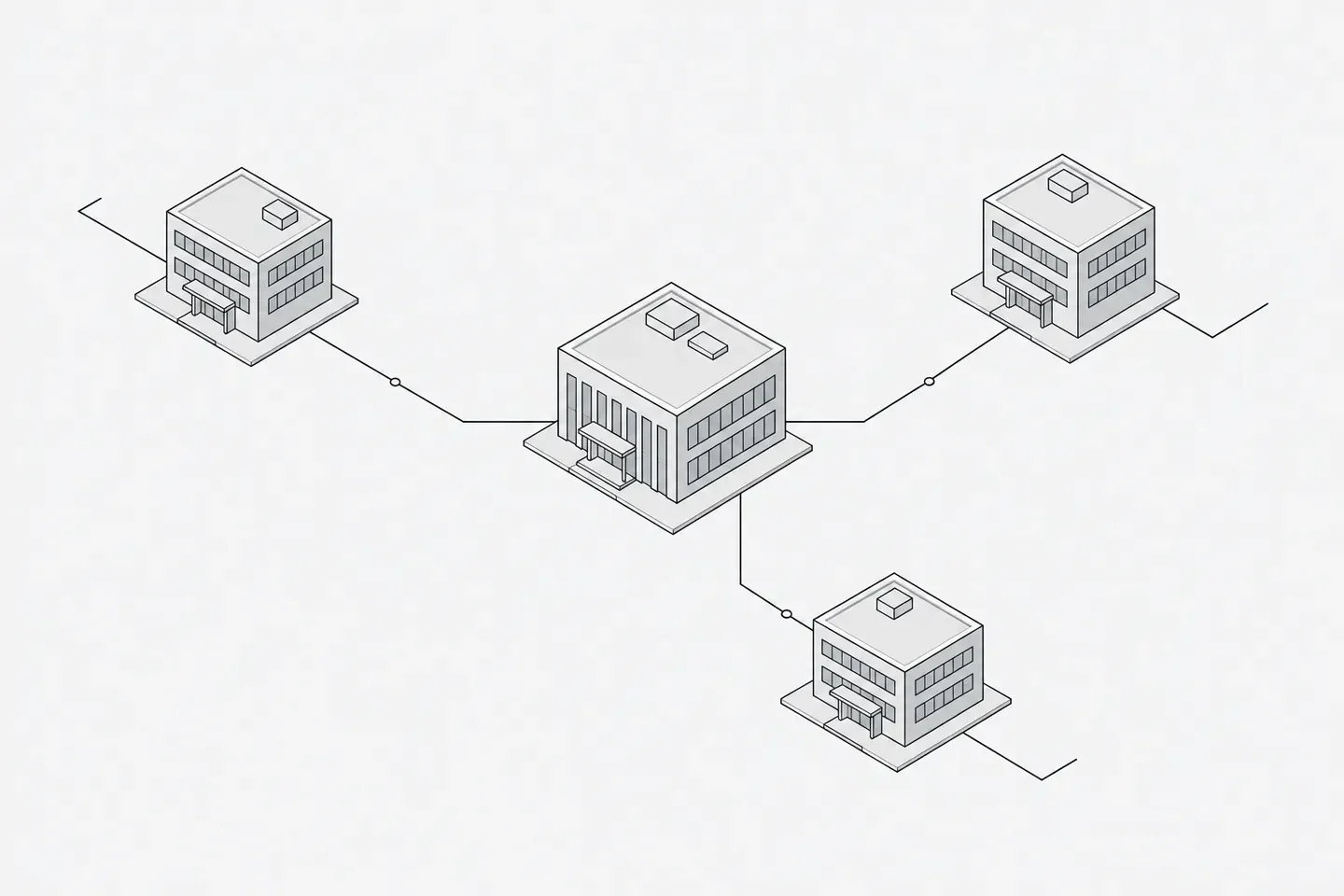
Your German sales team says the website generates too few inquiries, while headquarters reports healthy international traffic. Buyers may be finding your products through search but reaching the wrong language, the wrong contact form, or a sales team that cannot serve them.
For a regional Managing Director or Marketing Director, this creates an awkward reporting problem. Search visibility looks reasonable at group level, but the regional pipeline tells another story. Without visibility into what happens between the landing page and the first sales response, neither team can confidently explain the gap.
In our experience, the website structure and the inquiry process are often managed as separate responsibilities. Marketing owns the pages, regional teams own sales relationships, and IT maintains the systems connecting them. A buyer experiences all three as one journey.
Two website structures create different kinds of friction
Established B2B companies commonly arrive at a multi-market website through one of two routes.
The first is a global website with translated pages. Headquarters controls the product catalogue, brand language, technical infrastructure, and lead forms. Regional teams contribute translations or request local changes.
This structure offers consistency. Product information can be maintained centrally, security is easier to govern, and regional content starts from a shared foundation.
The weakness appears when translation is treated as market readiness.
A German-language product page may describe a machine accurately but show specifications in unfamiliar units, reference projects outside Europe, and send every inquiry to a global inbox. The language is local; the buying process remains centralized.
The second route is a collection of country websites, often inherited through acquisitions, distributor relationships, or regional expansion.
A European subsidiary may run a different content management system from its APAC counterpart. Product categories have different names, forms collect different information, and headquarters cannot compare inquiry performance across countries.
These sites may reflect local needs better. However, inconsistent tracking and disconnected systems make it difficult to manage the customer journey across markets.
Our view is that neither architecture is inherently wrong. A centralized website can support effective local journeys, while independent country sites can work under shared operational standards.
The decision should depend on where buyers need local information, who can respond to them, and how reliably inquiries reach that person.

Inquiries disappear at five points between search and sales
A website visit becomes commercially useful only when the buyer can continue toward a relevant conversation.
Consider an illustrative example: a purchasing manager in Germany searches for an industrial cutting machine. The company has a suitable product and an authorized regional distributor. Yet the buyer may never reach that distributor.
There are five places to investigate.
Wrong-language landing pages. The buyer finds an English product page despite a German version existing elsewhere. The localized page may have weak search indexing, unclear language navigation, or a URL structure that makes the wrong version more visible. The buyer must search again for local availability.
Generic contact forms. The page offers one form for every market and product. It asks for a name, email, and message, but does not capture the country of installation, product family, or intended application. The sales team receives an inquiry without enough context to assign it confidently.
Missing distributor paths. The company sells through regional distributors, but product pages provide no indication of who serves the buyer's location. A general office address replaces a useful local contact path.
Slow routing. The inquiry reaches a shared inbox. Someone must identify the market, check the product category, find the appropriate distributor, and forward the message. The process may involve several handoffs, none of which is measured.
No reply service-level agreement (SLA). An SLA is an agreed commitment describing how quickly a team should respond. Without one, forwarding an inquiry can be mistaken for completing the task. The buyer may receive no acknowledgement and no meaningful sales response.
A lead form submission is not a successful inquiry until the right team receives it and someone takes responsibility for the response.
These failures affect two links in the Reputation Chain: Found, whether relevant buyers can discover the company, and Chosen, whether that interest has a workable path toward a commercial decision.
Improving visibility without checking the contact journey leaves an important part of that chain unmeasured.

A market page should answer local buying questions
A translated product description is useful, but it does not establish that the company can serve a particular market.
For industrial equipment, the buyer may need confirmation of product availability, technical compatibility, installation support, and the appropriate commercial contact.
A practical market page should therefore provide three kinds of information.
First, local proof. This could include a permitted regional customer reference, a relevant application example, supported industries, or verified service coverage. If no local reference is available, the company should describe its actual coverage rather than imply an established local customer base.
Second, a local contact path. The buyer should understand whether inquiries go to a regional sales office, an authorized distributor, or a centrally managed specialist team. Where distributor territories overlap, the site should explain how the correct contact is determined.
Third, specifications in locally useful formats. Units, terminology, product variants, certification references, and downloadable technical documents should match the market where applicable. Compliance claims should be verified for that market, not copied automatically from another region.
These requirements do not mean every country needs an independently maintained website.
A structured global platform can use shared product records, reusable page templates, and market-specific content fields. The important decision is which information remains global and which information needs a local owner.
The goal is to make the relevant buying information accessible without creating another collection of pages that regional teams cannot maintain.
Routing rules need owners, exceptions, and measurable response times
Once a buyer submits an inquiry, the website must pass it to someone who can act.
For a multi-market B2B company, our recommended starting point is a routing table covering the buyer's market and the relevant product family.
Each combination should identify the responsible team or distributor, a backup owner, and the expected response window.
For example, an illustrative routing rule could assign German inquiries about laser cutting equipment to the DACH equipment team. Inquiries about a different product family could go to a separate regional specialist.
Where no distributor is assigned, the rule should send the inquiry to a named central owner rather than leave it unassigned.
A useful first routing specification includes:
- Market identification: country of intended use, with language and website location treated as supporting signals rather than definitive evidence.
- Product classification: product family, intended application, and any information required to identify the correct specialist.
- Assignment and exceptions: primary owner, backup owner, and handling rules for incomplete information or overlapping territories.
- Response commitment: acknowledgement and first meaningful reply targets, with escalation when the assigned team misses the agreed window.
- Measurement: submission timestamp, assignment timestamp, first-response timestamp, and final disposition.
Two measures deserve particular attention.
Routing time is the time between receiving an inquiry and assigning it to the responsible owner. First-response time measures the interval between submission and the first meaningful response from that owner.
An automatic acknowledgement does not count as a meaningful sales reply.
Routing can be handled through a customer relationship management (CRM) system, form integrations, or automation. AI-assisted classification may help interpret unstructured requests, but it should not replace explicit ownership rules and exception handling.
The technology matters less than the ability to inspect what happened when an inquiry was delayed or assigned incorrectly.
A routing dashboard also needs clear limitations. Faster assignment does not prove higher lead quality or more revenue. Those outcomes require separate measures, consistent definitions, and a longer observation period.
Prove the routing improvement in one region before expanding
A regional team does not need headquarters to rebuild every country website before testing a better inquiry path.
Our recommendation is to begin with one region and one product family where the commercial owner is clear and the existing inquiry process can be measured.
The initial baseline should cover relevant search visibility, market-page traffic, form submissions, qualified inquiries, routing time, and first-response time. Where the data is incomplete, document that limitation rather than manufacture a starting value.
Then define a fixed scope: the market pages to improve, the form fields to change, the routing rules to introduce, and the team responsible for responding.
Under Vibery's V² Framework, this work begins with a Value Map that records the baseline, deliverables, agreed measures, and a First Value Date. The release can then be implemented through a Value Sprint, followed by Value Transfer so the client's regional and central teams can maintain the process.
Value Growth reviews performance at 30, 90, and 180 days, including results that fall below the agreed target.
For headquarters, the useful output is a documented operating pattern: page requirements, routing rules, ownership responsibilities, measurement definitions, and the exceptions discovered during the regional rollout.
That evidence can inform whether the next market needs the same structure or a different one. It also makes the investment easier to evaluate without assuming the first region represents every country.
Start by tracing real inquiries, not redesigning the website
Before approving a multi-market redesign, choose one important product family and trace recent inquiries from the landing page to their first meaningful sales response.
Check which markets those buyers came from, what information they encountered, who received their requests, and how long each handoff took. Identify where records are missing and agree what a successful route should look like.
This exercise can reveal whether the priority is search visibility, local content, form design, distributor ownership, or the routing process itself. It may also show that some existing pages work well and should remain unchanged.
Our web and automation services address these connected problems through market structure, conversion paths, and measurable inquiry routing. If you want to define a regional baseline and a practical first scope, book a Value Map call.